Author: Dr. Anitha Bhat, BAMS, 26 years of clinical experience, Senior Physician, Shathayu Ayurveda Retreat
Category: Snehapanam in Ayurveda
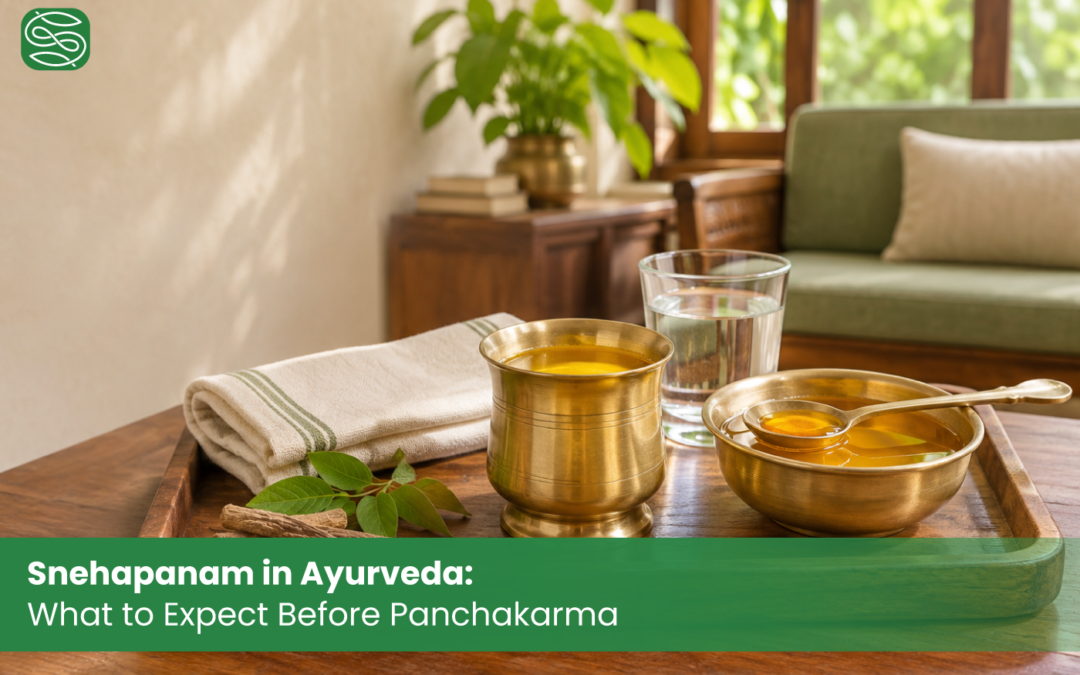
Snehapanam in Ayurveda: What to Expect Before Panchakarma
Drinking spoonfuls of warm ghee on an empty stomach, more each morning for 3-7 days, sounds like the opposite of a health treatment. In Ayurveda it’s one of the most important steps before a deep detox. It’s called Snehapana. Medicated ghee is taken in carefully increasing doses so it can work its way through the body and loosen deep-seated toxins, getting them ready to be flushed out in Panchakarma.
Snehapanam is the Ayurvedic practice of drinking medicated ghee or oil, in carefully planned amounts, to prepare the body for deeper cleansing. Shathayu Retreat sets the plan individually, as the appropriate amount and duration vary from one person to another.
- Used as the first step of Panchakarma, known as internal oleation.
- Taken on an empty stomach under the supervision of an Ayurvedic physician.
- Usually given over about three to seven days, with the exact duration set by the Shathayu Retreat physician.
- Supported by warm, light meals and rest for the duration of the course.
- Not suited to everyone, so a health review always comes first.
A detox is commonly expected to begin with fasting, juices or a long list of restrictions. Ayurveda begins differently, with medicated ghee or oil taken in measured amounts. Before any cleansing therapy starts, the body is first prepared to release what it holds, and this preparation shapes how the rest of Panchakarma unfolds. Understanding this step explains why a Panchakarma course is planned with care and never hurried. The sections below follow the process from the first morning to the last.
Why Would Anyone Drink Ghee Before a Detox?
The word snehapanam combines sneha, meaning oil or ghee, with panam, meaning drinking. Ayurveda holds that cleansing therapies such as Virechana (purgation) work more effectively when the body has first been softened and loosened from within. For this reason, classical Ayurvedic practice places oleation before purification, as part of purvakarma, the preparation phase of treatment. It is commonly referred to as ghee therapy. In practice, it is the preparation stage that opens the way for Panchakarma, the Ayurvedic cleansing process in which this step comes first.
What Are the Three Kinds of Snehapanam?
The purpose of the therapy determines how it is given. Shodhana snehapanam prepares the body for a cleansing therapy and is taken early in the morning on an empty stomach, in a graded plan. Shamana snehapanam aims to settle an aggravated dosha; it is taken in a moderate amount when the person feels hungry, without food, over a period set by our physician. Brimhana snehapanam nourishes the body and is given in a small amount mixed with food. Most guests who arrive for Panchakarma receive the shodhana type, so the stages below describe that path.
What Does the Snehapanam Journey Look Like, Stage by Stage?
Each guest follows a slightly different path, although the stages remain consistent.
- Before You Arrive: Share your complete health history with us, including existing conditions, past surgeries and every medicine or supplement you take. Mention your food habits, allergies and how regular your digestion is. Plan for time away from work and other commitments, as the course calls for rest. If our physician advises it, begin simplifying your meals a few days before arrival.
- The First Day: We review your digestion, bowel habits and current medicines. The prescribed ghee or oil is taken on an empty stomach. Rest follows, with warm water until hunger returns, and a light, warm meal is then taken.
- The Middle Days: Energy levels may dip, and some guests experience heaviness, nausea or a change in stools. We review the progress every morning and decide whether to continue, adjust or stop the course. Rest is part of the plan, and any discomfort should be reported to our team promptly. A course typically lasts about three to seven days, and our physician determines the exact length.
- The Last Day: We look for the classical signs that the body is well oleated: wind and stools passing freely, a stronger appetite, soft and oily stools, a soft sheen on the skin, mild tiredness and an aversion to ghee. When these appear, the course ends. Heaviness, nausea or a loss of appetite can instead point to too much oleation, and our physician adjusts or stops the course.
- Afterwards: Within Panchakarma, internal oleation is usually followed by a short phase of external oil massage (abhyanga) and herbal sudation (swedana), and then by the main cleansing therapy, such as Virechana. Food is then reintroduced in stages, beginning with liquids such as rice gruel and moving to semi-solid and then normal meals as digestion settles, a stepwise return known as sansarjana krama. Follow-up appointments should be kept, and the return to a demanding schedule should be gradual.
What Can You Eat While You Take It?
Diet supports the therapy as much as the ghee does. Warm, light, easily digestible meals, such as rice gruel or vegetable soup, suit the course, and warm water throughout the day is encouraged. Cold, heavy, fried and very oily foods, raw salads and cold drinks are best avoided until you are told otherwise.
What Are the Common Myths About Snehapanam?
- Myth: It is a weight-loss shortcut.
Reality: It is a cleansing preparation and is planned for that purpose alone. - Myth: More ghee produces better results.
Reality: The amount is graded to the individual’s digestion, and excess can upset the stomach. - Myth: It is safe to try at home.
Reality: The appropriate amount depends on the individual’s health, so it is always taken under supervision. - Myth: It is used only for Panchakarma.
Reality: Its most common use is before a cleansing therapy, although Ayurveda also describes a pacifying (shamana) use and a nourishing (brimhana) use in small amounts with food. - Myth: Everyone can take it.
Reality: Some conditions call for caution, as the next section explains.
Who Should Be Careful with Snehapanam?
Snehapanam is not suitable for everyone. We review everyone’s health before deciding whether it is appropriate, and extra care is needed in the following situations:
- Weak digestion or signs of undigested food (ama), as the body may not digest the ghee well.
- Acute illness, fever or diarrhoea, when the body is already under strain.
- A liver or pancreas disorder, which needs a careful review before any plan is made.
- Pregnancy or breastfeeding, when the therapy is generally avoided and any use needs close medical supervision.
- A recent cleansing therapy, as the body needs time to recover.
- Diabetes, thyroid problems or high cholesterol, where reports and medicines are reviewed first.
- A vegan diet or avoidance of dairy, since ghee is a dairy product and the plan must be adjusted accordingly.
None of these situations automatically rules out the therapy. They indicate that the plan needs extra care, or advise against it. A complete health history, shared at the first consultation, ensures that the decision is based on your own health.
When Is It Time to Call the Doctor?
Contact us immediately if you experience repeated vomiting, severe stomach pain, marked weakness, dizziness or fainting, persistent loose stools, or any other symptom of concern. Do not wait for the next morning review.
How Do Guests Begin With Shathayu Retreat?
At Shathayu Retreat, an Ayurvedic physician assesses each guest before any therapy begins and determines whether internal oleation is suitable. We build the preparation around the guest’s health and comfort, explain each step before it begins and review progress throughout. You can read more about Shathayu Retreat’s Ayurvedic detox retreat or contact our team to ask which preparation suits you.
Is Snehapanam Right for You?
Snehapanam is a careful, physician-led preparation and not a quick fix. Understanding the stages, diet, and warning signs helps guests approach the course with confidence. If you are considering Panchakarma and wish to know whether it is right for you, book a consultation with Shathayu Retreat and begin with a physician review.
FAQs for Ayurveda Weight Loss Retreat
1. Is snehapanam the same as ghee therapy?
Yes, ghee therapy is the common name. The Ayurvedic term also covers medicated oils, so we may choose ghee or oil depending on the guest’s constitution, digestion and the condition being treated.
2. Can I take snehapanam at home without a doctor?
No. Large amounts of fat can upset digestion, and the appropriate plan depends on the individual’s health. Home use without supervision can cause nausea, weakness or more serious effects. Always begin with an assessment by an Ayurvedic physician.
3. Can I work or travel during the course?
4. Can vegans take this therapy?
Ghee is a dairy product, so it does not suit a vegan diet. Some physicians use medicated oils instead. Mention your diet and any allergies at the first consultation so the plan can be tailored accordingly.
5. Does snehapanam raise cholesterol?
6. How is internal ghee therapy different from an oil massage?
An oil massage, called abhyanga, applies oil to the skin and works from outside. Snehapanam works from within, with ghee or oil taken by mouth. Physicians often use both during preparation for Panchakarma.
7. Is snehapanam safe during pregnancy?
It is generally avoided in pregnancy and during breastfeeding, unless a physician supervises it closely. Inform the team if you are pregnant, may be pregnant or are nursing before any Ayurvedic therapy begins.
8.Can people with diabetes or thyroid problems take internal oleation?
It depends on the condition, the reports and the medicines involved. Our physician reviews these before deciding and may advise against it or adjust the plan. Regular medicines should never be stopped without medical advice.
9. What should I carry or arrange before the course?
Bring your reports, a list of your medicines and comfortable clothes for rest. Plan time away from work and let your family know your schedule. Please confirm with our team in advance what the stay provides.
10. How can I book a snehapanam consultation at Shathayu Retreat?
Use the contact page or the booking page on our website to reach the team. Our physician will review your health history and explain whether it is suitable before any therapy is planned.
11. What are the side effects of snehapanam?
Common, usually temporary effects include nausea, a feeling of heaviness, reduced appetite, tiredness and loose or oily stools. This is why the course is reviewed every morning. Repeated vomiting, severe stomach pain, dizziness or marked weakness need the team’s attention straight away.
12. How much ghee is given during snehapanam?
There is no standard amount. Classically, a small test dose is given first and the amount is then increased day by day according to how well it is digested. The physician sets and adjusts the dose for each guest, so it should never be copied from someone else’s plan or tried at home.
About the Author
Dr. Anitha Bhat
Director | Senior Ayurveda Physician | Women’s Health Expert
Dr. Anitha is the Director and Senior Ayurveda Physician at Shathayu Ayurveda Retreat, with over 26 years of clinical experience in holistic Ayurvedic healthcare. She is dedicated to helping patients restore their health through personalized Ayurvedic treatments, authentic Panchakarma therapies, nutrition, and lifestyle medicine.
She has extensive expertise in treating women’s health concerns, PCOS, infertility support, menopause, obesity, diabetes, thyroid disorders, digestive disorders, skin diseases, stress-related illnesses, and lifestyle disorders. Her compassionate and patient-focused approach empowers individuals to achieve lasting wellness through sustainable changes in diet, daily routine, and preventive healthcare.
As one of the key clinical leaders at Shathayu, Dr. Anitha has played an instrumental role in developing patient-centric treatment protocols and comprehensive wellness programs that integrate classical Ayurveda with modern diagnostics and clinical research.
She strongly believes that Ayurveda is not only a system for treating illness but a way of living that helps people achieve lifelong health, vitality, and disease prevention.