
Ayurvedic Treatment for Sciatica Pain
Ramanathan, 42, had been suffering from persistent lower back discomfort that had spread to the back of his left leg, causing a severe
throbbing and burning sensation behind the knee. When bending forward or reaching out, the pain was exacerbated.
He continued to use strong non-steroid pain relievers that made him drowsy but didn’t provide complete pain relief.
How commonly we hear this, but one needs to know Low back and leg pain could be sciatica !!!
Low back pain is becoming the most frequent musculoskeletal condition. Sciatic pain is a disorder with low back pain that spreads through the hip, to the back of the thigh, and down the inside of the leg. There are many causes for low back pain, however, true sciatica is a symptom of inflammation or compression of the sciatica nerve. Due to injury or compression of the sciatic nerve, sciatica is a common cause of low back pain.
Understanding Sciatica:
The Ayurvedic Perspective of Gridhrasi
In classical Ayurvedic medicine, seeking a dedicated ayurvedic treatment for sciatica involves addressing what is recognized as Gridhrasi, one of the 80 distinct Vatavyadhi (neurological and neuromuscular disorders caused by a severe Vata Dosha imbalance).
The word Gridhrasi is derived from the Sanskrit root “Gridhra”, meaning “vulture”. In advanced stages of this condition, a patient’s gait changes as their affected leg becomes tense, stiff, and slightly curved due to radiating pain. This causes them to walk with a distinct limp that resembles the movement of a vulture.
Dosha Involvements in Sciatica (Gridhrasi)
To curate an effective line of treatment for Sciatica Pain Relief, our physicians analyze the specific underlying Dosha profile of your condition:
Vataja Gridhrasi
Characterized by severe radiating pain starting from the lumbar spine and traveling through the buttocks, thighs, knees, calf muscles, and feet. It features shooting pain, pricking sensations (Toda), twitches, and structural stiffness.
Vata-Kaphaja Gridhrasi
Occurs when Kapha binds with Vata. Along with the sharp nerve pain, the patient experiences heavy limbs (Gaurava), deep drowsiness, indigestion, a persistent freezing or cold sensation down the leg, and severe morning stiffness.
Symptoms of Sciatica
Pain in the lower back and a constant dull ache Weakness in the thigh, leg, and foot muscles is possible.
Restriction in lifting the affected leg -generally tested by SLR test

The pain may spread to the feet or toes.

Numbness in the thighs.

Pricking sensation on the skin.
Recurrent discomfort in the lower back.

A tingling sensation in the toes and feet.
Recurrent discomfort in the lower back.
A tingling sensation in the toes and feet.
Cardinal Symptoms to Watch For
- Constant dull ache in the lower back accompanied by sharp, radiating leg pain.
- Numbness, tingling, or a “pins-and-needles” sensation extending into the feet and toes.
- Noticeable weakness in the thigh, leg, and foot muscles.
- Severe structural restriction when trying to raise the affected leg (clinically tested using the Straight Leg Raise or SLR test).

Cardinal Symptoms to Watch For
- Constant dull ache in the lower back accompanied by sharp, radiating leg pain.
- Numbness, tingling, or a “pins-and-needles” sensation extending into the feet and toes.
- Noticeable weakness in the thigh, leg, and foot muscles.
- Severe structural restriction when trying to raise the affected leg (clinically tested using the Straight Leg Raise or SLR test).
Causes of Sciatica
Sciatica is a common symptom of several different medical conditions. However, an estimated 90 percent of cases are due to a herniated (slipped) disk.
Lumbar spinal stenosis – narrowing of the spinal cord in the lower back.
Spondylolisthesis – a condition where a disk slips forward over the vertebra below it. Other causes – for instance, injury within the spine, and infection. In many cases of sciatica, there is no single obvious cause.
Factors Contributing to Sciatic Nerve Pain
A common risk factor is an age – people in their 30s and 40s are more likely to develop sciatic pain. When it comes to occupation, it is more common in jobs that require lifting heavy loads for extended periods of time. Sedentary people, who sit for long periods of time and are physically inactive, are more likely to develop sciatica than active people.
Ayurvedic Treatment for Sciatica Pain
First-line Ayurvedic Treatment for Sciatica Pain typically includes some combination of physical therapy, medications,
therapeutic injections, and alternative therapies.
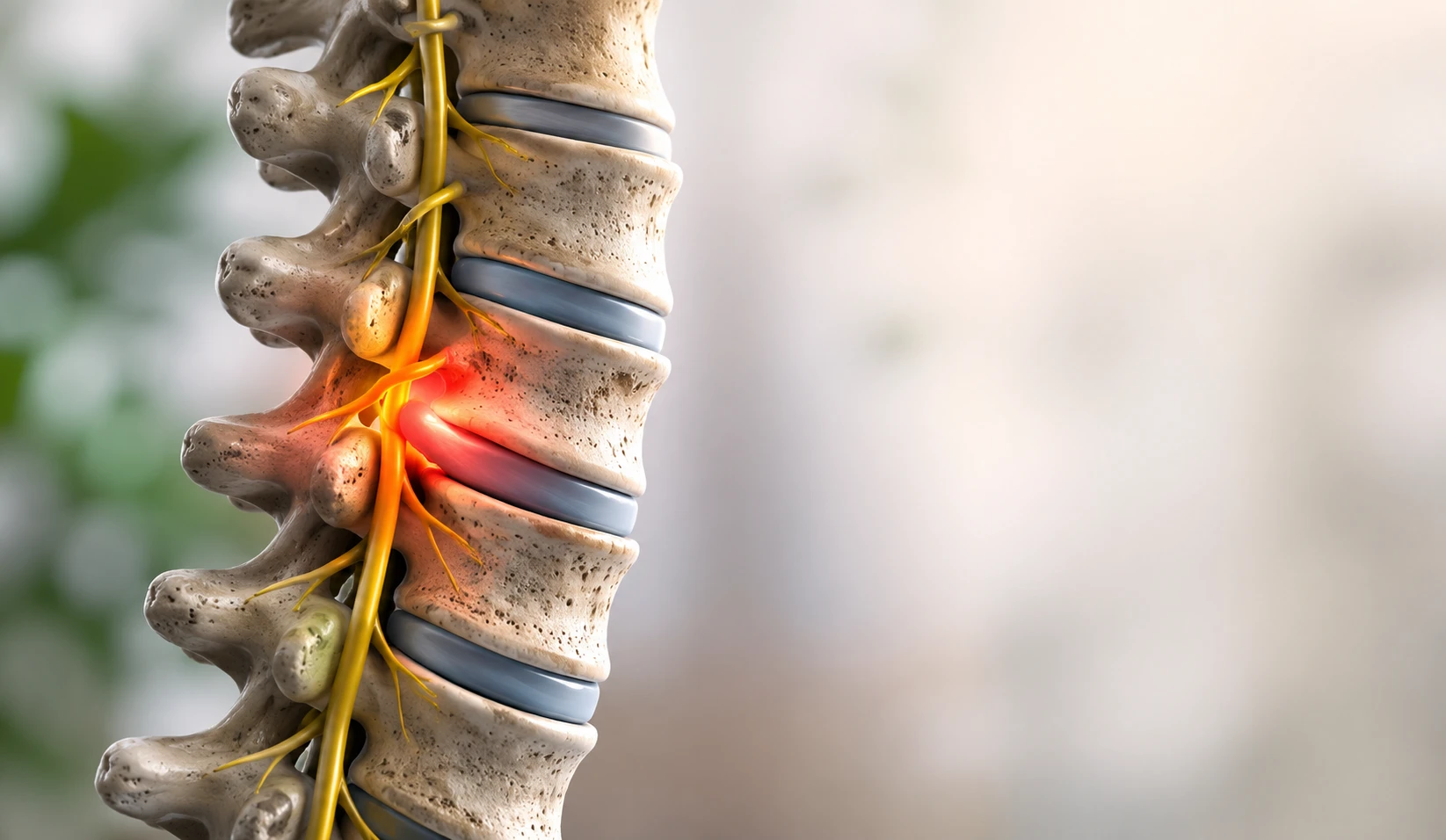
Primary Causes of Nerve Compression
Herniated or Slipped Discs
An estimated 90% of cases stem from a lumbar disc bulge compressing the spinal nerve roots.
Lumbar Spinal Stenosis
The narrowing of the spinal canal in the lower back puts direct mechanical pressure on the cord.
Spondylolisthesis
A condition where a vertebra slips forward over the one beneath it, pinching the nerve pathway.
Sedentary Lifestyle & Postural Strain
Long hours of desk-bound work weaken core muscles, while tasks requiring heavy lifting for extended periods accelerate spinal degeneration.
Treatment comprises three approaches:
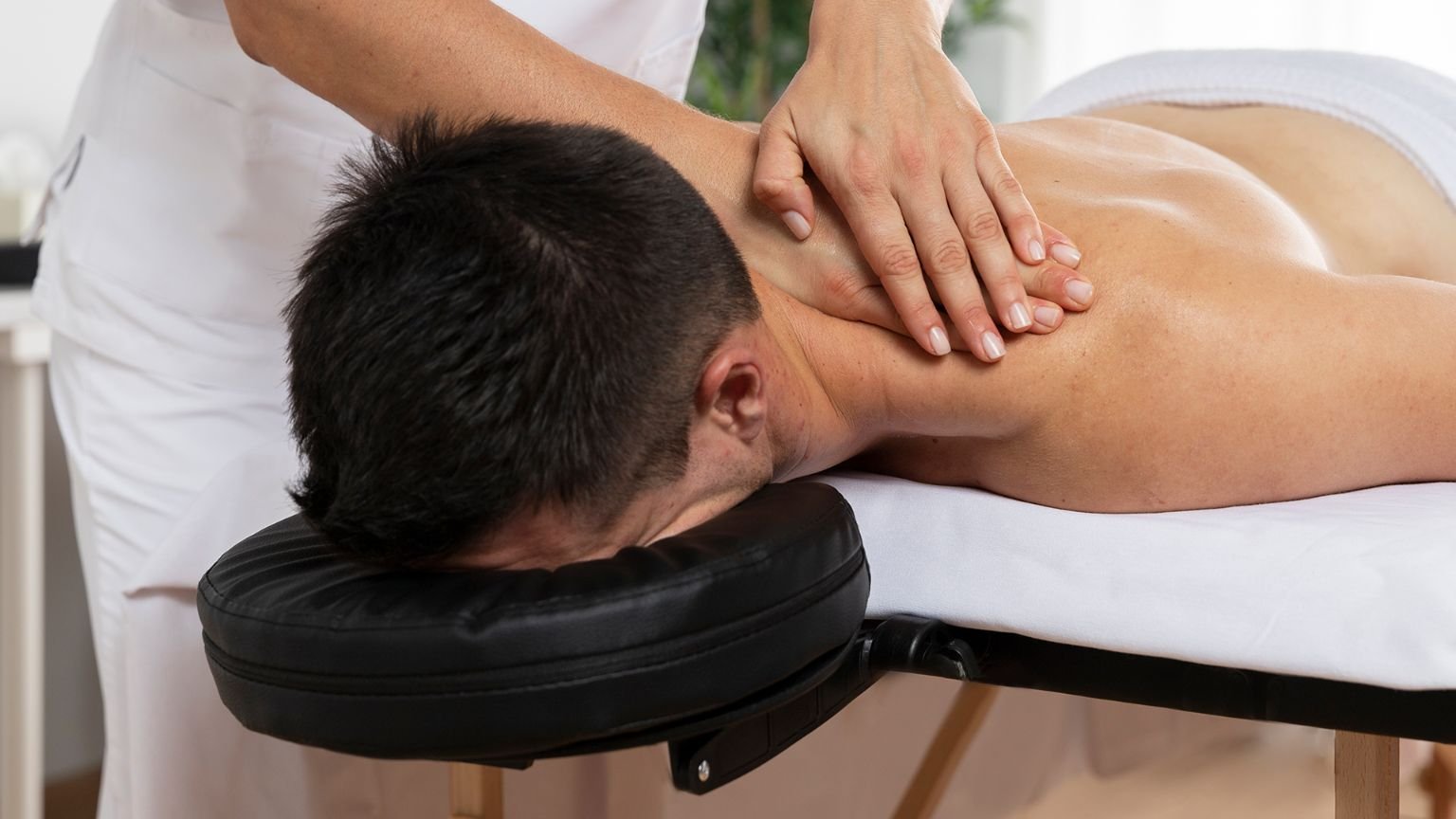
Physical Therapy to immediately reduce pain and inflammation
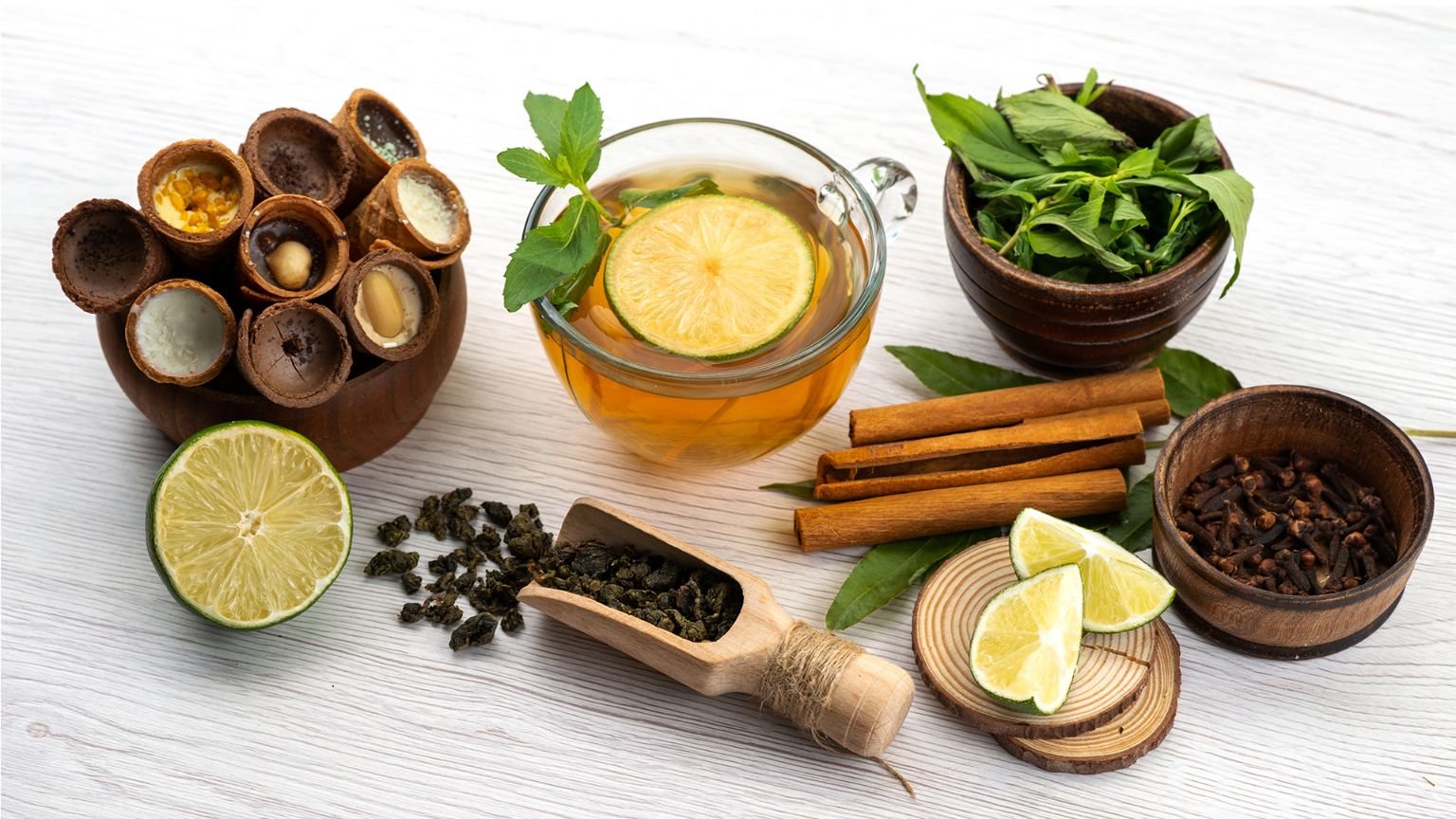
Ayurveda herbs and medicines for sciatica

Rejuvenation (Rasayana) for maintaining natural strength and vitality.

Medication for Sciatica Pain
Both prescription and over-the-counter NSAID Pain relief medications may be used to relieve sciatica pain temporarily, But Ayurveda suggests many Herbs & Formulations for Sciatica treatments. Herbs like Nirgundi, Bala, Punarnava, Eranda, Shigru, Rasna, Jambira, Masha can be used as supplements for a longer period. Ayurveda Formulations like Yogaraja Guggulu, Triyodashanga guggulu, Kaishora Guggulu, Vishamushti Vati, Prasarinyadi Kashaya, Dasmoola Kwatha, Sahacharadi Kashaya, Rasna- erandadi Kashaya, etc are used by Ayurveda physicians to relieve sciatic pain or back pain .
Herbs that Support Sciatica Recovery

Nirgundi
Reduces pain and swelling around the nerve.

Bala
Strengthens the muscles and nerves supporting the lower back and leg.

Punarnava
Reduces inflammation and clears excess fluid buildup.

Eranda (castor)
Relieves stiffness and restores mobility.

Rasna
Targets deep-seated joint and nerve pain.

Shigru
Supports better circulation to the affected area.
Massage Therapy for Sciatica
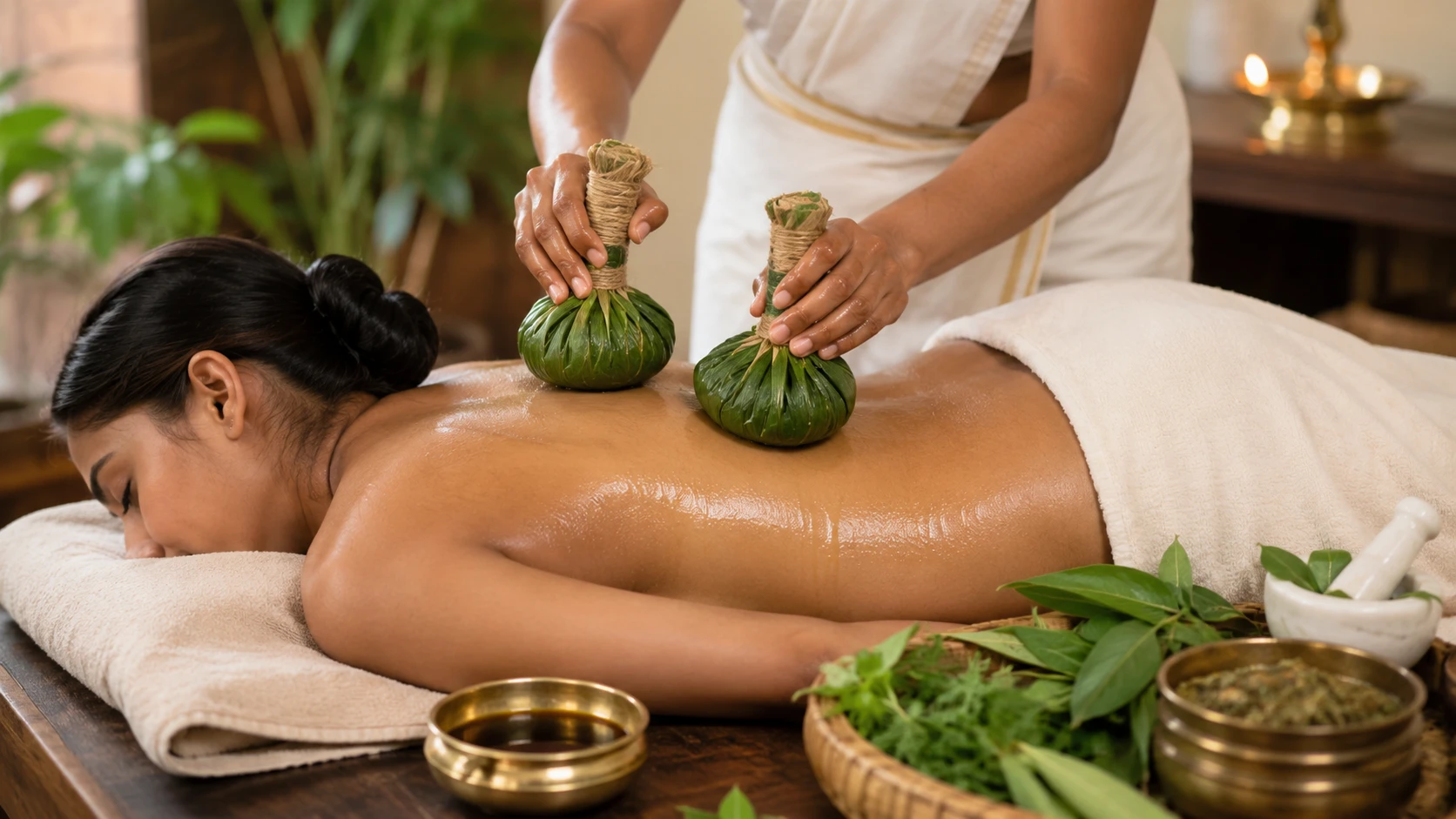
Certain forms of ayurveda massage therapy, like Abhyanga swedana, Pathrapotali swedana (Elakizhi), Sarvangadhara (Pizhichil), Kati Vasti, Vasti (the most important procedure in Ayurveda treatment for Sciatica ) etc., have benefits for pain relief. The benefits of massage therapy include:
- Improving blood circulation, which in turn creates a better healing response in the body
- Relaxing tight muscles, which may be contributing to the pain
- Releasing endorphins, which are hormones in the body that function as natural pain relievers
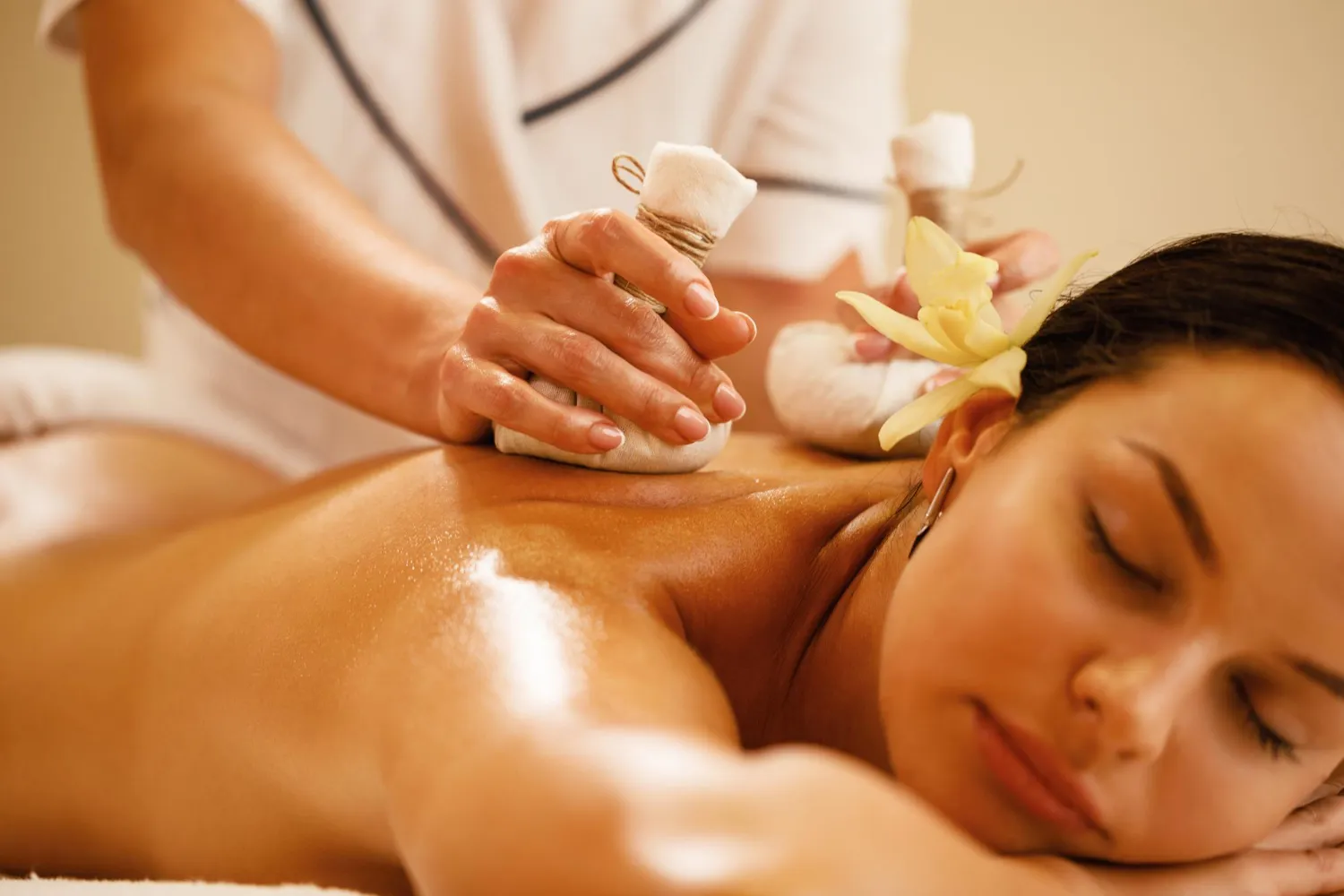
Massage Therapy for Sciatica
Certain forms of ayurveda massage therapy, like Abhyanga swedana, Pathrapotali swedana (Elakizhi), Sarvangadhara (Pizhichil), Kati Vasti, Vasti (the most important procedure in Ayurveda treatment for Sciatica ) etc., have benefits for pain relief. The benefits of massage therapy include:
- Improving blood circulation, which in turn creates a better healing response in the body
- Relaxing tight muscles, which may be contributing to the pain
- Releasing endorphins, which are hormones in the body that function as natural pain relievers
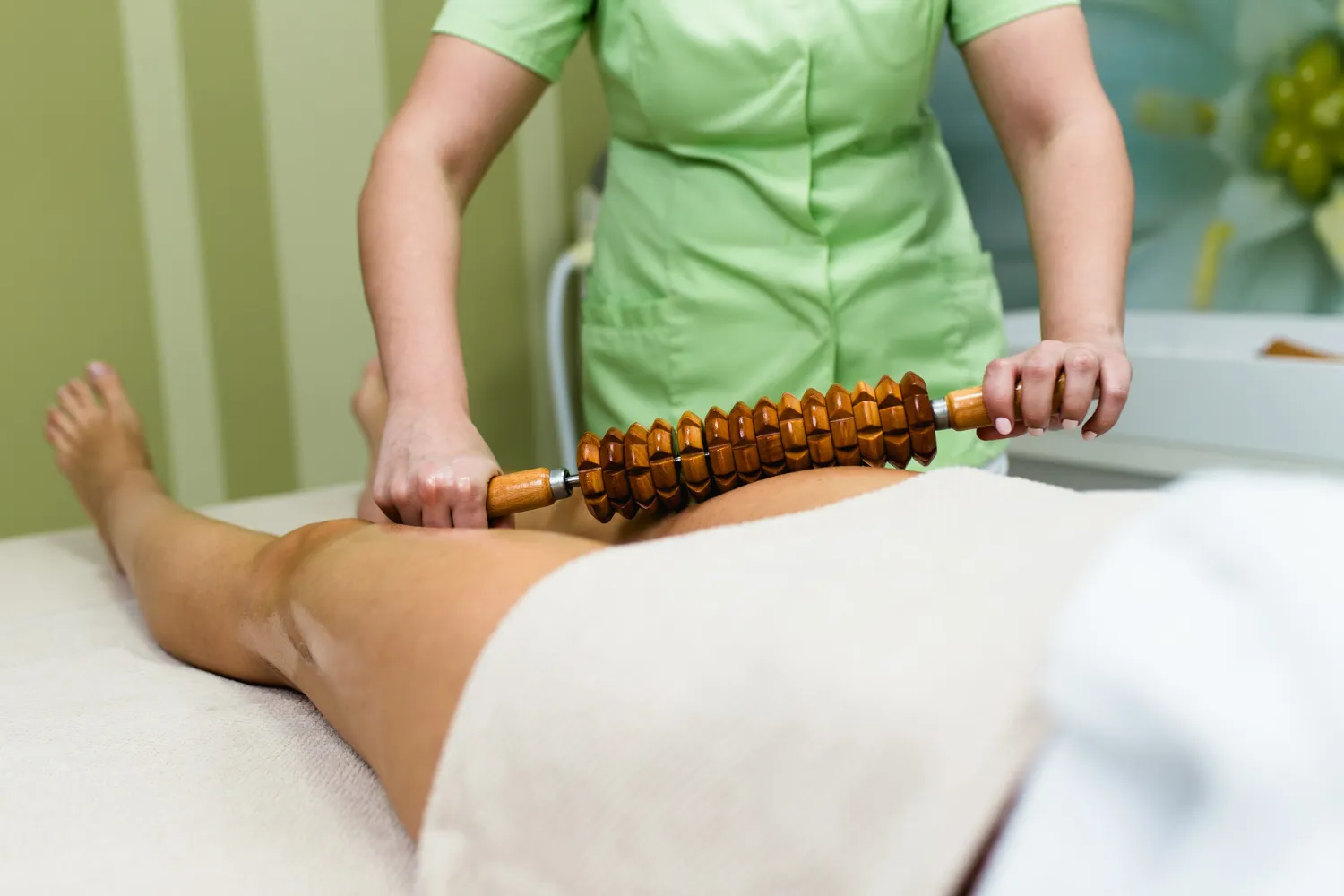
Lumbar Therapeutic puncture for Sciatica
Just like Lumbar therapeutic injections may help treat pain stemming from conditions that affect the sciatic nerve ayurveda has been using a physical therapy program called AGNIKARMA procedure providing enough pain relief. These therapies are directed toward relieving the inflammatory changes and underlying causes of Sciatica, releasing the spasms and nerve compressions in the affected area, strengthening and nourishing the entire spine & supporting tissues. Usually the treatment period is 4- 5 weeks according to the severity of the disease. In 4-6 weeks, the majority of patients find their symptoms are relieved with treatment. Ayurveda stands as a better alternative to surgery for Sciatica.
Some Simple Home remedies for Sciatica
- Apply (DO NOT MASSAGE) medicated ayurvedic oil such as mahanarayana taila or pinda taila as it increases blood flow to injured areas, thereby speeding healing.
- Use a warm towel or a salt poultice to relieve pain.
Ensure that the treatment feels warm for 15 to 20 minutes.
- During a bath, alternate between warm and cold water to improve circulation and reduce muscle spasms.
- Incorporate superfoods such as turmeric and ginger into your diet.

Some Simple Home remedies for Sciatica
- Apply (DO NOT MASSAGE) medicated ayurvedic oil such as mahanarayana taila or pinda taila as it increases blood flow to injured areas, thereby speeding healing.
- Use a warm towel or a salt poultice to relieve pain.
Ensure that the treatment feels warm for 15 to 20 minutes.
- During a bath, alternate between warm and cold water to improve circulation and reduce muscle spasms.
- Incorporate superfoods such as turmeric and ginger into your diet.
Specialized Panchakarma & Upakarma Procedures
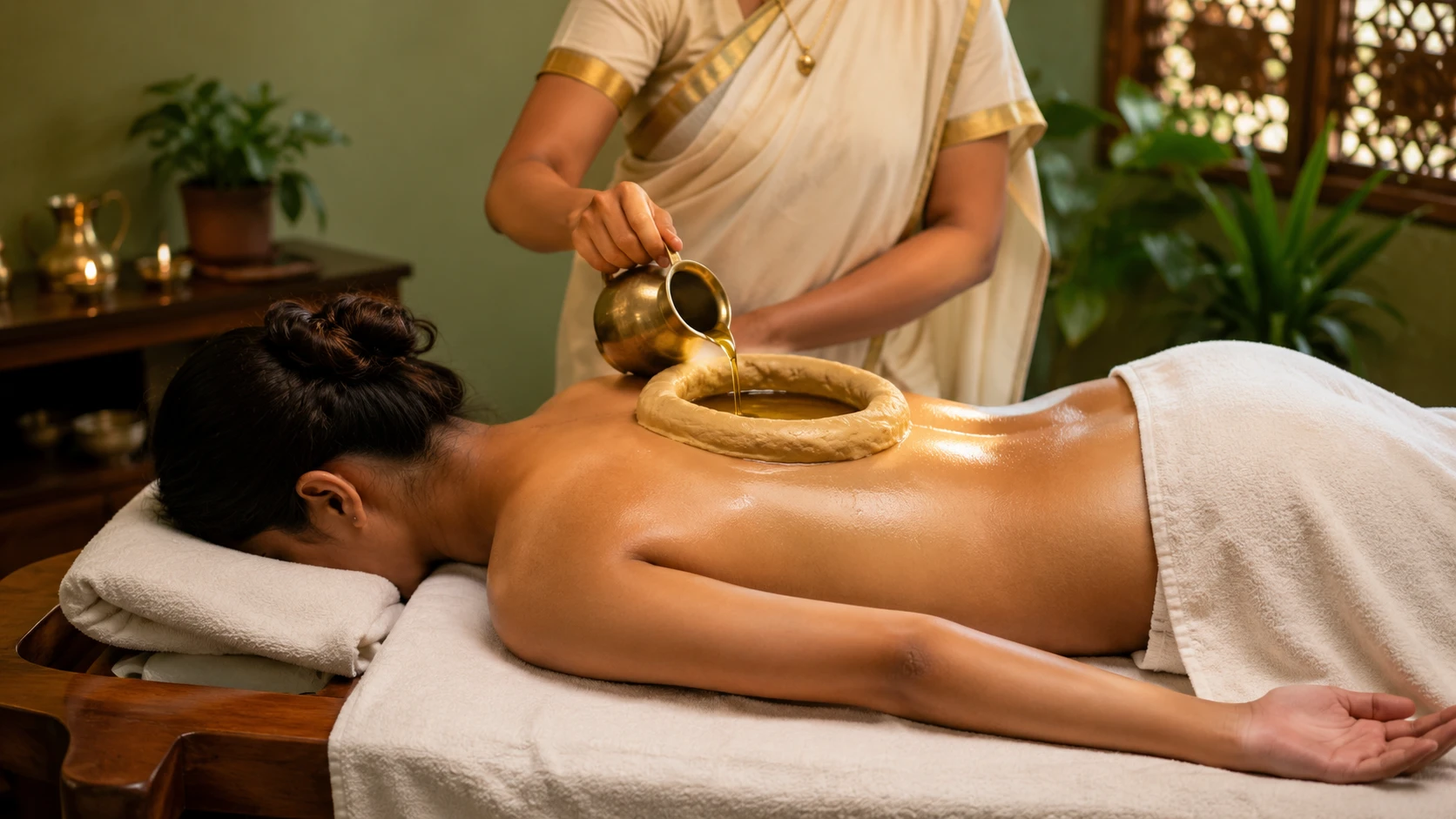
Kati Basti
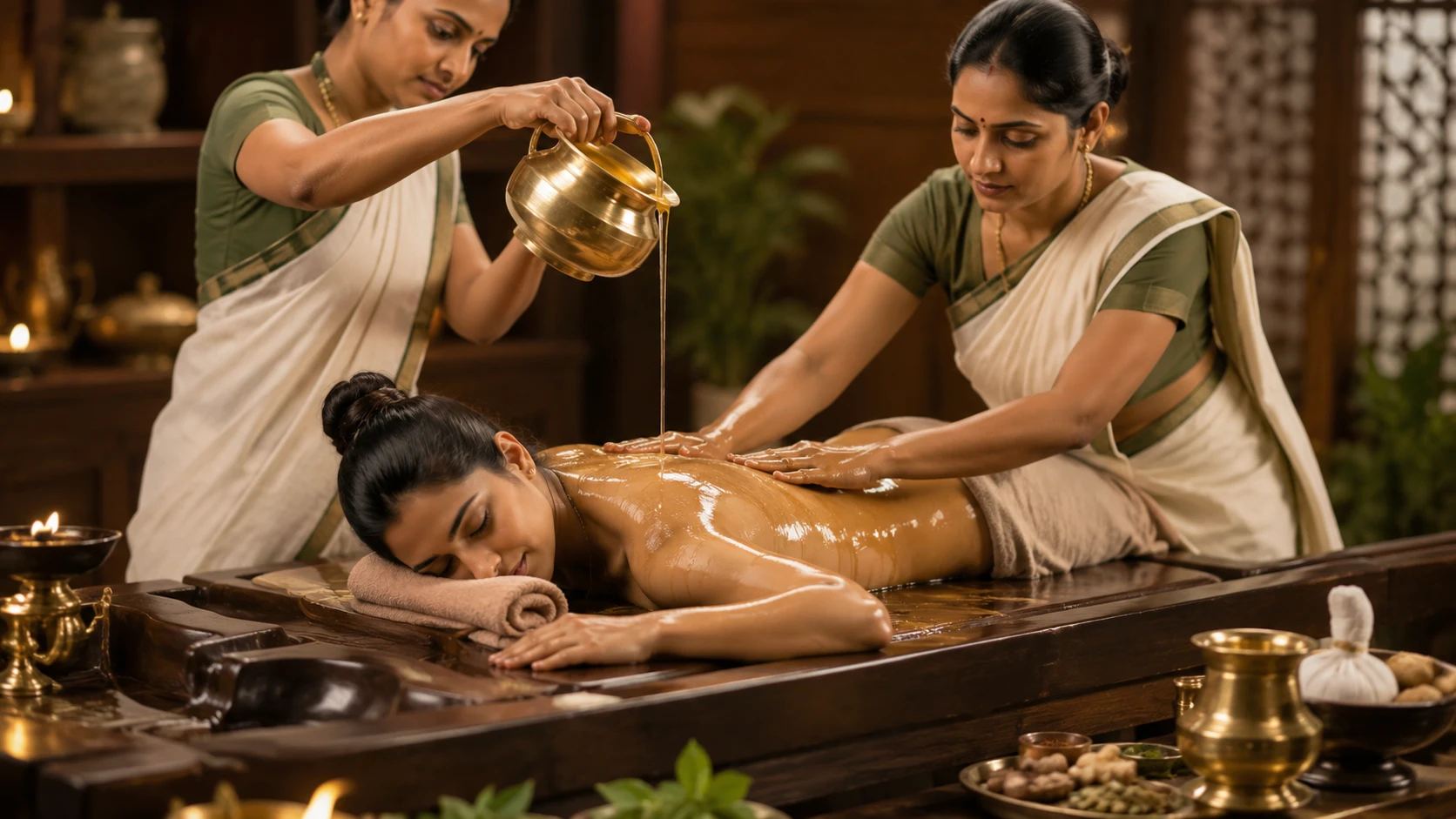
Patrapinda Sweda (Elakizhi)
Sarvangadhara (Pizhichil)
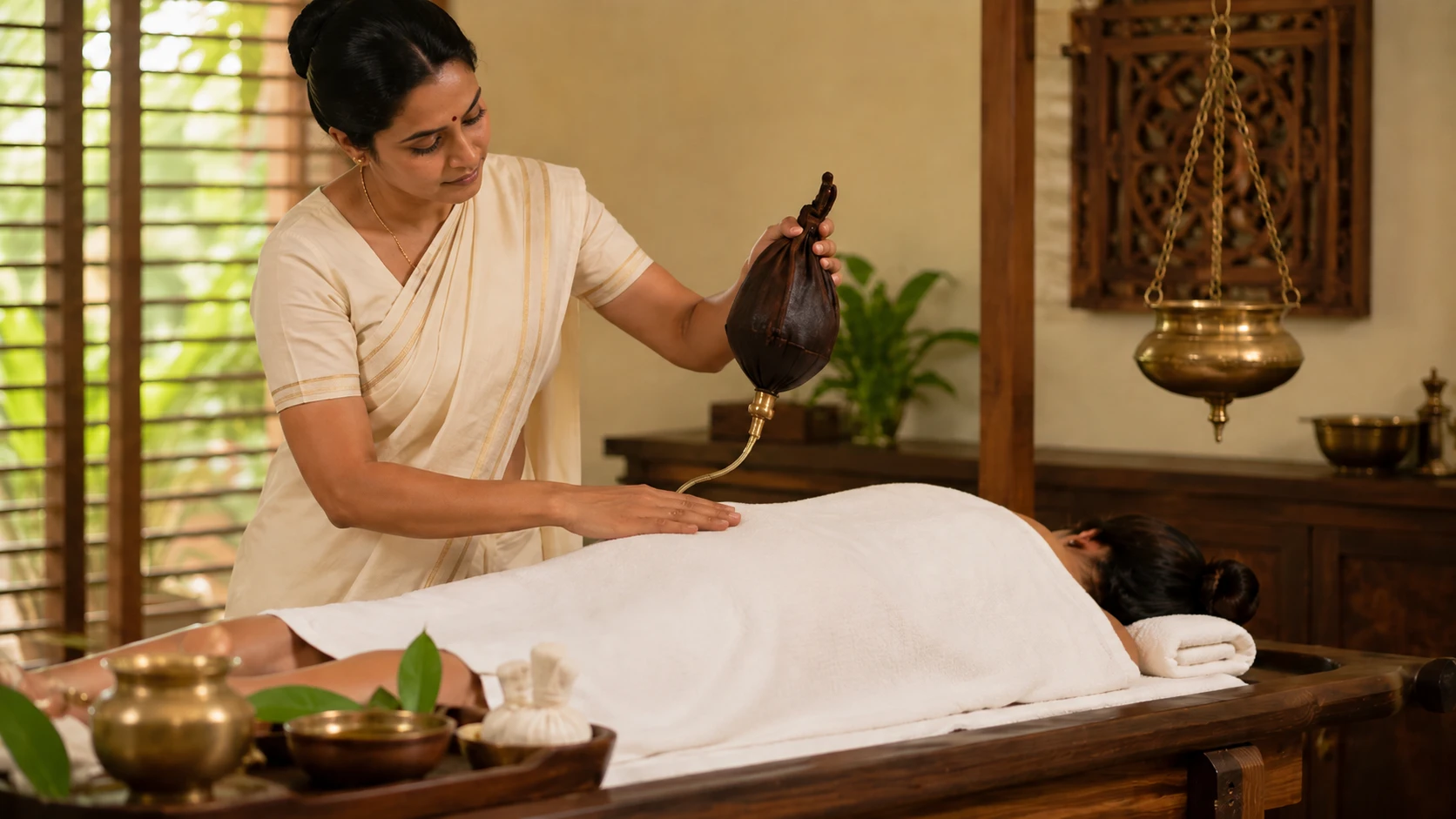
Vasti (Basti Karma)
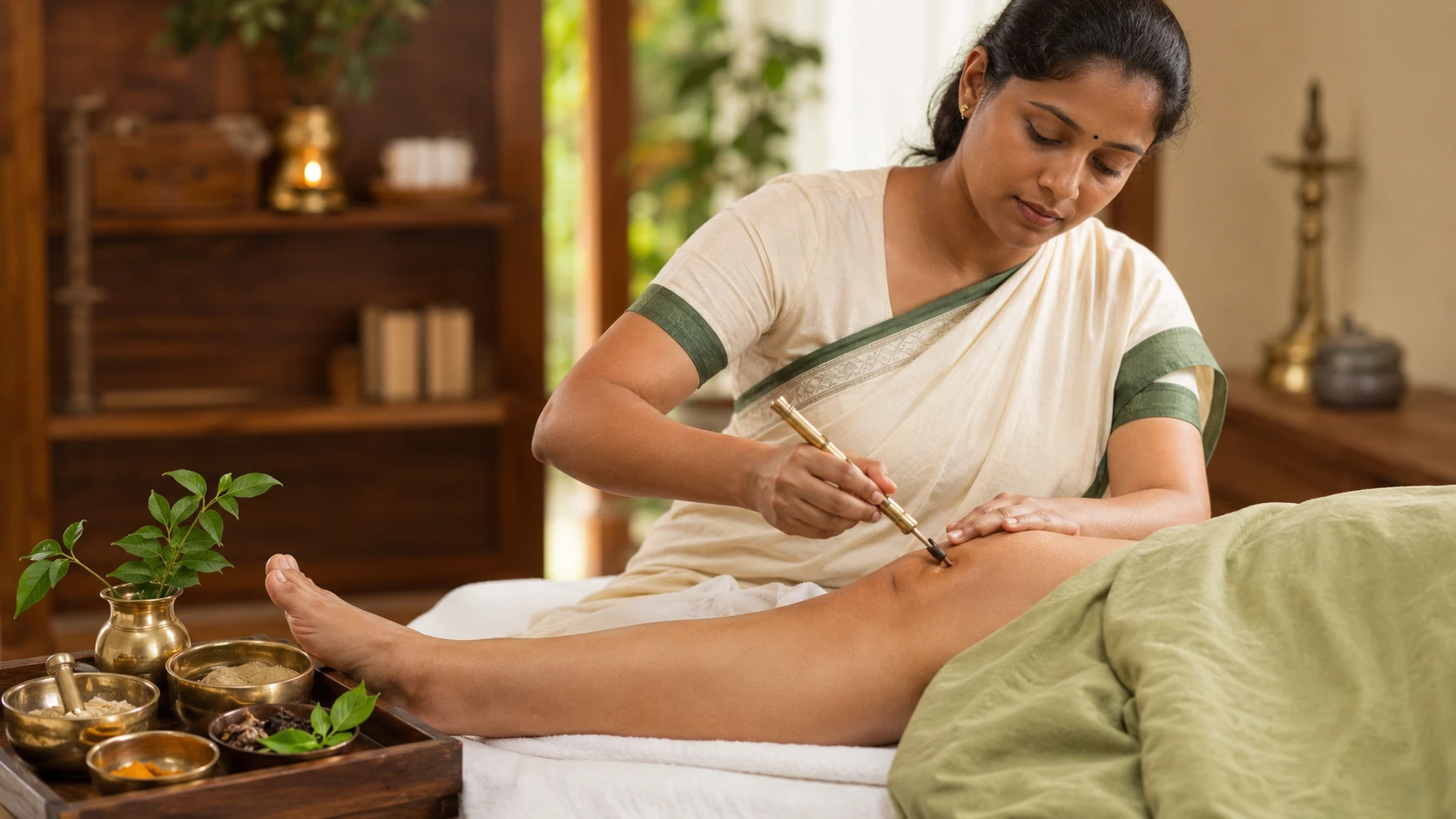
Agnikarma (Thermal Micro-Cautery)
Pathya & Apathya: Diet & Lifestyle Modifications
Long-term recovery relies on strict adherence to a Vata-pacifying diet and lifestyle regimen. Below is the clinical guideline followed at our retreat:
Pathya (Wholesome Foods & Habits to Adopt) |
Apathya (Unwholesome Foods & Habits to Avoid) |
| Grains: Nutritious, easily digestible grains like Wheat and Red Rice (Raktashali). | Dry Legumes: Bengal Gram (Chanaka), Peanuts, Flat Beans, and Pigeon Peas which increase internal gas and aggravate Vata. |
| Healthy Fats: Organic Cow’s Ghee (Ghrita), Sesame Oil, and Castor Oil to lubricate the joints from within. | Vata-Aggravating Foods: Excessively dry, light, cold, or highly processed foods; bitter or astringent leftovers. |
| Healing Vegetables: Drumstick (Shigru), Snake Gourd (Patola), Ginger, and Garlic to combat internal inflammation. | Harmful Postures: Prolonged unbroken sitting, riding two-wheelers over rough roads, and lifting heavy loads unassisted. |
| Daily Habits: Lukewarm water baths (Ushnodaka Sweda), gentle application of Mahanarayana Taila, and proper restful sleep. | Lifestyle Triggers: Suppression of natural urges (Vegadharana), strenuous heavy exercise, and sleepless nights (Prajagarana). |
Ready to Live Free from Radiating Nerve Pain?
Don’t let chronic spinal nerve compression dictate your mobility and lifestyle. Take a definitive step toward lasting structural relief and experience the specialized, doctor-guided care your spine deserves at our sanctuary.
Disclaimer
All the Ayurveda treatments will be customized by Physician only after detailed consultation. Treatments may be changed based on the individual strength.
Frequently Asked Questions
Can Ayurveda cure sciatica permanently?
Yes, Ayurveda can offer long-term, lasting relief from sciatica, but it depends heavily on the root cause (like a herniated disc or muscle spasm) and your post-treatment lifestyle. Instead of just masking the radiating leg pain with painkillers, Ayurvedic therapies target the root cause, usually an aggravated Vata dosha (the biological energy controlling movement and nerves) and compressed spinal structures. If you maintain good posture and a back-strengthening routine afterwards, the pain is unlikely to return.
What is the best ayurvedic treatment for sciatica nerve pain?
There isn’t a single “magic pill”, but a specialized procedure called “Kati Basti” is widely considered the most effective therapy. In this treatment, a reservoir of warm, herb-infused Vata-pacifying oil is held over your lower back using a ring of dough. This deeply nourishes the spinal discs, reduces nerve inflammation, and relaxes tight lower back muscles that are pinching the nerve.
How long does it take for Ayurvedic medicine to work on sciatica?
For mild or acute flares, many people notice a significant reduction in shooting pain and stiffness within 7 to 10 days of starting targeted therapies. However, if you are dealing with chronic sciatica caused by severe disc degeneration, a complete treatment plan typically spans 3 to 4 weeks, which often includes a structured Panchakarma (detoxification) protocol.
Which Ayurvedic oil is best for massaging a painful sciatic nerve?
You should look for oils specifically formulated to pacify Vata and reduce nerve irritation. Mahanarayana Taila, Sahacharadi Taila, and Dhanwantharam Taila are the top choices.
- Important Tip: Never press hard directly onto the painful nerve pathway during a flare-up. The oil should be warmed and applied with gentle, sweeping downward strokes to soothe the nervous system rather than agitate it.
Can Panchakarma completely treat severe sciatica?
Panchakarma is highly effective for severe, stubborn cases because it cleanses internal toxins (Ama) that block body channels. For sciatica, doctors primarily use Basti (medicated enema therapy using herbal decoctions and oils). Since the colon is considered the main seat of Vata in Ayurveda, Basti works directly at the core to calm nerve hypersensitivity and restore mobility.
Are there any home remedies in Ayurveda for sudden sciatica flares?
When a painful spasm hits, you can find temporary relief at home by drinking warm ginger-turmeric tea (both are potent natural anti-inflammatories) and applying a warm compress. You can also gently apply warm castor oil to your lower back. Ayurveda recommends avoiding ice packs, as cold temperatures can further aggravate Vata and worsen nerve stiffness.
What food should I avoid if I have sciatic nerve pain?
In Ayurveda, you want to avoid “dry, cold, and gas-producing” foods that trigger Vata imbalances.
- Avoid: Deep-fried foods, cold beverages, raw salads, junk food, and excessive caffeine (which dries out nerve channels).
- Choose: Warm, freshly cooked meals with healthy fats like ghee, and spices like ginger, garlic, and turmeric that actively fight inflammation.
Is yoga safe to practice during Ayurvedic sciatica care?
Yes, but only specific, gentle stretches. Restorative yoga poses like Bhujangasana (Cobra Pose) and Viparita Karani (Legs-Up-the-Wall Pose) help relieve spinal pressure. However, you must absolutely avoid intense forward bends (like touching your toes), as bending forward stretches the sciatic nerve aggressively and can severely worsen a slipped disc.
What are the signs that my sciatica is finally improving?
The most reliable sign is a phenomenon called centralization. This means the shooting pain begins to retreat out of your lower leg/foot and moves upward toward your buttocks or lower back. Even if your lower back feels a bit sore, the fact that the pain is leaving your leg means the pressure on the sciatic nerve is successfully clearing.
Can I take Ayurvedic medicine alongside modern painkillers?
Generally, yes, but they shouldn’t be swallowed at the exact same moment. If you are taking muscle relaxants or NSAIDs, it is best to leave a gap of at least 60 to 90 minutes before taking your Ayurvedic herbal formulations (like Yogaraj Guggulu). Always share your current prescription list with your Ayurvedic doctor to prevent any overlapping interactions.