
Author: Dr. Anitha Bhat, Senior Physician, Shathayu Ayurveda Retreat
Category: Liver Health / Ayurveda / Case Studies
Grade 3 Fatty Liver Reversed to Grade 1: Quick Summary
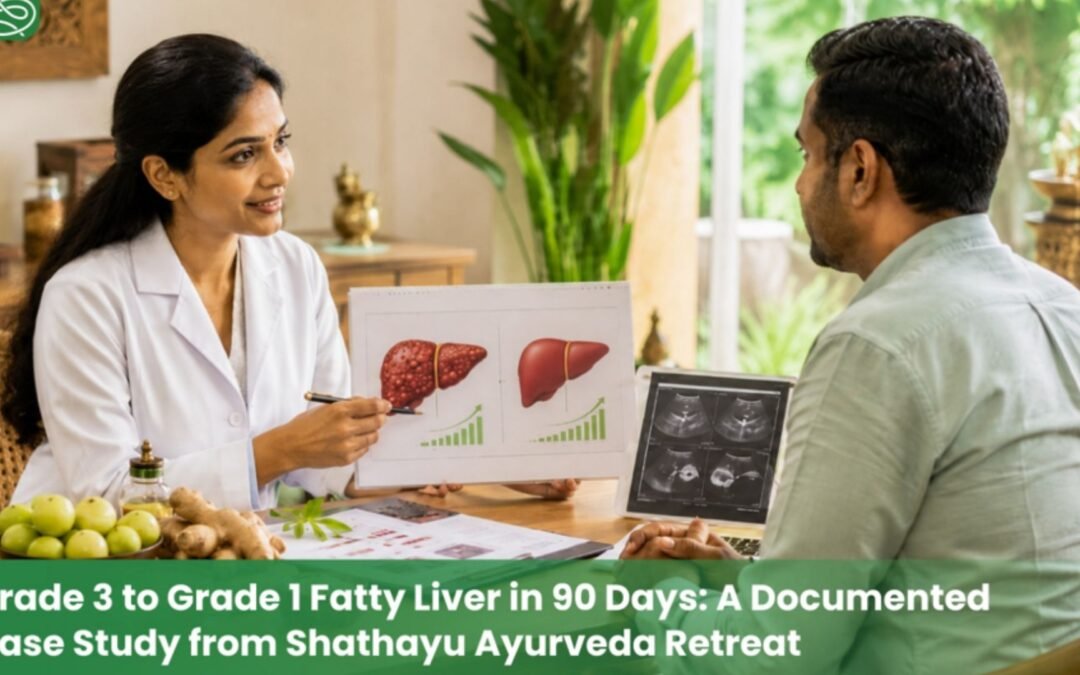
A 36-year-old female patient came to Shathayu Retreat with ultrasound-confirmed Grade 3 fatty liver and hepatomegaly. Her liver span measured 16.8 cm at baseline.
After a structured 90-day Ayurvedic intervention, her repeat ultrasound showed Grade 1 fatty liver, with the liver span reduced to 15.1 cm and no hepatomegaly.
This case study explains what the reports showed, what the grades mean, and how a physician-guided Ayurvedic approach supported measurable improvement over 90 days.
This is a single documented case and should not be treated as a guaranteed result for every patient. Improvement depends on the person’s metabolic health, stage of disease, adherence to the treatment plan, associated conditions, and follow-up care.
Why This Grade 3 Fatty Liver Case Study Matters
Fatty liver disease is one of the most common liver concerns seen today. It happens when excess fat accumulates inside liver cells. In many people, it is linked to metabolic factors such as weight gain, insulin resistance, high triglycerides, poor diet, sedentary habits, disturbed sleep, and hormonal imbalance.
The condition was earlier called non-alcoholic fatty liver disease, or NAFLD. Current international liver guidelines increasingly use the term metabolic dysfunction-associated steatotic liver disease, or MASLD, to reflect the metabolic factors involved.
In earlier stages, liver fat accumulation can often improve with structured food correction, movement, weight management, and metabolic support. However, many patients receive only broad advice such as “lose weight,” “avoid oily food,” or “walk daily.” While this advice may be directionally right, it often lacks the structure, supervision, and follow-up needed to produce measurable change.
This case matters because it is supported by two ultrasound reports taken 90 days apart, showing improvement in both liver grade and liver size.
The two key changes were:
1. Grade reduced from 3 to 1
2. Liver span reduced from 16.8 cm to 15.1 cm
This makes the case clinically meaningful while still requiring responsible interpretation.
Grade 3 vs Grade 1 Fatty Liver: Before and After 90 Days
| Parameter | Baseline: Day 0 | Follow-Up: Day 90 |
| Age / Sex | 36 years, Female | 36 years, Female |
| Liver span | 16.8 cm, enlarged | 15.1 cm, normal size |
| Liver echopattern | Bright, increased acoustic reflectivity | Bright, increased acoustic reflectivity, reduced grade |
| Ultrasound impression | Hepatomegaly with fatty infiltration, Grade 3 | Grade 1 fatty liver, no hepatomegaly |
| Portal vein | Normal course and caliber | Normal course and caliber |
| Gallbladder, CBD, pancreas, spleen, kidneys | Unremarkable | Unremarkable |
| Ovaries | Polycystic ovarian morphology, mild enlargement | Polycystic ovarian morphology, mild enlargement; hormonal evaluation advised |
| Other finding | IUCD in situ | IUCD in situ |
What the Ultrasound Reports Show About Fatty Liver Improvement
The most important findings in this case are the grade change and the reduction in liver span.
Ultrasound grading can carry some variation because it depends partly on visual interpretation. Liver span, however, is a measurable number. In this case, the liver span reduced by 1.7 cm, moving from an enlarged measurement to a normal liver size.
The grade improved from Grade 3 to Grade 1, and the liver size also reduced. When both findings move in the same direction, the improvement becomes more meaningful than a grade change alone.
Patient identity, exact dates, and diagnostic centre details have been withheld to protect confidentiality.
Understanding Grade 1, Grade 2 & Grade 3 Fatty Liver
Ultrasound grading is usually based on how bright the liver appears, how clearly deeper structures are visible, and whether the organ appears enlarged.
Grade 1: Mild
Grade 1 indicates mild fat accumulation. The liver may appear slightly brighter than normal, but the deeper structures are still clearly visible.
Grade 2: Moderate
Grade 2 indicates moderate fat accumulation. The liver appears brighter, and visibility of the portal vein walls and diaphragm may be slightly reduced.
Grade 3: Severe
Grade 3 indicates severe fat accumulation. The liver appears significantly brighter, and deeper structures such as the diaphragm, portal vein walls, and posterior segments may be difficult to see. Liver enlargement, or hepatomegaly, may also be present.
A Grade 3 finding should not be ignored. Persistent severe steatosis can increase the risk of liver inflammation and long-term complications if the underlying metabolic issue is not addressed.
Can Grade 3 Fatty Liver Improve? Understanding the Science
This condition often develops when the liver receives more metabolic load than it can process efficiently. This may happen due to excess refined carbohydrates, high sugar intake, abdominal weight gain, insulin resistance, sedentary habits, poor sleep, stress, or irregular eating patterns.
The encouraging part is that simple fat accumulation can improve when the underlying metabolic load is corrected early and consistently.
At Shathayu Retreat, the approach is not limited to the liver alone. The physicians look at the broader metabolic and digestive imbalance behind the diagnosis. The Ayurvedic focus is on improving Agni, reducing Ama, supporting Meda metabolism, correcting food habits, improving routine, and strengthening the body’s natural metabolic function.
Ayurvedic Perspective on Fatty Liver (Yakrit Roga & Meda Dushti
In Ayurveda, fatty liver can be understood through the lens of impaired digestion, disturbed Agni, Ama accumulation, and Meda imbalance.
When digestion becomes weak or irregular, the body may not process food and metabolic waste efficiently. Over time, this can contribute to heaviness, sluggish metabolism, fat accumulation, and poor tissue nourishment.
From an Ayurvedic perspective, the liver is not treated in isolation. The physician looks at digestion, appetite, bowel movements, sleep, stress, weight, food habits, hormonal health, and daily routine before planning treatment.
This is why a structured Ayurvedic plan usually includes food correction, herbal support, Panchakarma-based therapies where suitable, yoga, pranayama, and lifestyle correction.
How Grade 3 Fatty Liver Was Managed Over 90 Days at Shathayu Ayurveda Retreat?
The patient’s 90-day plan at Shathayu Ayurveda Retreat was structured, physician-guided, and monitored through follow-up imaging.
The treatment approach focused on correcting the deeper metabolic environment that contributed to liver fat accumulation, rather than only targeting the liver as a separate organ.
1. Ahara: Dietary Correction for Fatty Liver
Dietary correction was a central part of the care plan.
The focus was on reducing metabolic burden and supporting better digestion. The diet plan was designed to be practical, structured, and sustainable.
The approach included:
1. Reducing refined carbohydrates and excess sugar
2. Avoiding processed, fried, and heavy foods
3. Avoiding late-night meals
4. Supporting a Kapha-Meda pacifying diet
5. Choosing lighter and easily digestible meals
6. Maintaining fixed meal timings
7. Supporting healthy weight and insulin response
The goal was not crash dieting. The aim was steady correction that could be continued even after the treatment period.
2. Panchakarma for Fatty Liver Management
Panchakarma-based therapies may be advised depending on the patient’s Prakriti, strength, digestive capacity, symptoms, and medical condition.
In metabolic liver care, the treatment direction may include Shodhana procedures such as Virechana or milder detoxification protocols when clinically appropriate.
These therapies are selected by the physician. They are not applied as a standard package for every patient.
The purpose is to support digestion, reduce Ama, improve metabolic processing, and help the body respond better to dietary and lifestyle correction.
3. Ayurvedic Herbs Traditionally Used for Fatty Liver
Herbal support was selected based on the patient’s condition and clinical assessment.
In Ayurvedic care for hepatic steatosis, herbs traditionally used for liver and metabolic support may include:
1. Katuki
2. Bhumyamalaki
3. Guduchi
4. Kalmegh
At Shathayu Ayurveda Retreat, these herbs are not used as a generic combination for every patient. The physician decides the formulation, dose, and duration based on the patient’s constitution, liver grade, digestion, symptoms, and associated findings.
4. Yoga & Exercise for Fatty Liver
Movement plays an important role in managing liver fat because it supports insulin sensitivity, weight management, abdominal circulation, and metabolic health.
The patient’s routine included structured movement and yoga according to her strength and treatment stage.
The plan may include:
1. Gentle walking
2. Guided yoga
3. Surya Namaskar sequencing, where suitable
4. Twisting postures to support abdominal circulation
5. Pranayama for stress regulation and better metabolic rhythm
For many patients, consistency matters more than intensity. A sustainable routine is often more useful than an aggressive plan that cannot be maintained.
5. Lifestyle – Daily Routine Correction
Metabolic liver concerns are strongly connected with daily habits. Irregular food timing, late-night eating, poor sleep, stress, and inactivity can all affect liver function and metabolic health.
The treatment plan included daily routine correction through:
1. Fixed meal timings
2. Better sleep discipline
3. Avoidance of late meals
4. Guided daily movement
5. Stress regulation
6. Practical follow-up instructions
These changes matter because improvement must continue after the retreat or treatment period ends.
Fatty Liver and PCOS: The Metabolic Connection
The ultrasound reports also noted polycystic ovarian morphology with mild enlargement.
This is clinically relevant because hepatic steatosis and PCOS-type findings may both be linked to insulin resistance. This does not mean one directly caused the other in this patient. However, the presence of both findings suggests the need to address metabolic health as a whole.
That is why the treatment approach focused not only on liver findings, but also on digestion, weight, insulin response, food habits, movement, hormonal context, and daily routine.
When Is Fatty Liver Serious? Warning Signs You Shouldn’t Ignore
Fatty liver often remains silent. Many people discover it only during an ultrasound done for another reason.
You should seek medical guidance if you have:
1. Fatty liver from Grade 1 to Grade 3 changes on ultrasound
2. High ALT, AST, or GGT levels
3. Diabetes or insulin resistance
4. PCOS or hormonal imbalance
5. High cholesterol or triglycerides
6. Abdominal weight gain
7. Obesity or rapid weight changes
8. Persistent fatigue or heaviness
9. A family history of metabolic disease
10. Repeated ultrasound findings showing liver fat accumulation
Early action matters because the condition is easier to address before inflammation, fibrosis, or more advanced liver changes develop.
How Shathayu Treats Fatty Liver: A Personalized Ayurvedic Approach
A programme at Shathayu Ayurveda Retreat is individualized after consultation.
The physician may review:
1. Ultrasound reports
2. Liver function tests
3. Lipid profile
4. Blood sugar and HbA1c
5. Weight and waist measurements
6. Digestion and appetite
7. Sleep and stress patterns
8. Existing medication
9. Associated conditions such as PCOS, diabetes, obesity, or high cholesterol
Based on this assessment, the programme may include:
1. Ayurvedic consultation
2. Diet correction
3. Panchakarma-based therapies where indicated
4. Herbal medicines
5. Yoga and pranayama
6. Lifestyle and sleep correction
7. Follow-up guidance
8. Repeat testing or imaging when required
The goal is not temporary symptom relief. The goal is measurable, sustainable improvement in metabolic and liver health.
A reduction from Grade 3 to Grade 1 in 90 days is not only about symptom relief. It shows the value of addressing the deeper metabolic imbalance behind the condition instead of relying on vague advice or temporary changes.
If you or a family member has recently received this diagnosis, the first step is to understand current liver health through proper reports, consultation, and a personalized plan.
Take the next step with Shathayu Ayurveda Retreat.
Book a consultation with our Ayurvedic physicians and begin a structured, doctor-led approach to metabolic liver health.
[Book Your Consultation]
FAQ for Fatty Liver
1. What Is Grade 3 Fatty Liver?
A Grade 3 fatty liver indicates severe fat accumulation within the liver, often accompanied by hepatomegaly (enlarged liver). It is commonly associated with obesity, insulin resistance, diabetes, high triglycerides, and metabolic syndrome. Although advanced fat accumulation should not be ignored, timely lifestyle correction and physician-guided treatment may help improve liver health before permanent damage develops.
2. Can Grade 3 fatty liver become Grade 1 in 90 days?
Yes, it is clinically possible in some cases, especially when the condition is mainly fatty infiltration without advanced fibrosis. In this documented case, the patient’s ultrasound reports showed improvement from Grade 3 to Grade 1 over 90 days.
However, this should not be treated as a guaranteed outcome. Results depend on metabolic health, adherence, associated conditions, and follow-up care.
3. Is fatty liver reversible with Ayurveda?
The condition can improve when diet, movement, weight, digestion, insulin resistance, and metabolic load are addressed consistently.
Ayurveda may support this process through dietary correction, Panchakarma-based detoxification where appropriate, herbal support, yoga, and daily routine correction.
For Grade 2 or Grade 3 findings, physician supervision and follow-up testing are important.
4. What tests confirm improvement?
Ultrasound is commonly used to detect and grade liver fat changes. Liver span measurement can also help track whether enlargement has improved.
Other useful tests may include:
1. Liver function tests such as ALT, AST, and GGT
2. Lipid profile
3. Fasting blood sugar
4. HbA1c
5. FibroScan with CAP score
6. MRI-PDFF in specialist settings
Your physician will decide which tests are needed based on your condition.
5. Does Fatty liver affect hormonal health?
Liver fat accumulation and hormonal conditions such as PCOS may share a common link through insulin resistance. In this case, the ultrasound also noted polycystic ovarian morphology, and hormonal evaluation was advised.
When both findings appear together, it is important to address metabolic health as a whole.
6. What Does a Fatty Liver Treatment Programme at Shathayu Include?
Every patient is different, so there is no one-size-fits-all treatment plan. After a detailed consultation, our Ayurvedic physicians design a personalised liver health programme based on the stage of fatty liver, digestion, metabolic health, symptoms, medical history, and diagnostic reports.Depending on your clinical assessment, the programme may include 14-21 days for Ayurveda panchakarma with yoga and diet changes.
7. How Do You Know If Fatty Liver Is Improving?
Many people with fatty liver have few or no symptoms, even when significant fat has accumulated in the liver. Likewise, some patients may feel better before measurable changes appear on investigations in LFT and scans.
8. Can I stop my current medication if I start Ayurvedic treatment?
No. Do not stop any prescribed medication without speaking to your physician. Many patients may continue their existing medication while undergoing Ayurvedic care, depending on their condition and medical advice.
Always bring your reports, prescriptions, and current medication list to your consultation.
9. Who should consider a programme at Shathayu Ayurveda Retreat?
You may consider a physician-guided programme if you have been diagnosed with Grade 1, Grade 2, or Grade 3 liver fat changes, especially if you also have weight gain, high cholesterol, diabetes, PCOS, insulin resistance, poor digestion, or irregular lifestyle habits.
A consultation is required to understand whether the programme is suitable for your condition.
10. Is Grade 1 fatty liver considered completely cured?
Grade 1 indicates that mild fat accumulation is still present in the liver. Although moving from Grade 3 to Grade 1 is a significant improvement, the patient should continue following the recommended diet, movement, sleep and lifestyle plan.
11. Can fatty liver return after it has improved?
Yes. Fatty liver can return if the underlying metabolic factors are not controlled. Weight gain, high sugar intake, sedentary habits, insulin resistance, irregular meals, inadequate sleep and poor metabolic health may contribute to its recurrence.
12.Can Grade 3 Fatty Liver Become Grade 1? Final Takeaway
Fatty liver is often silent, but the numbers on a report can reveal how serious it has become.
This documented case shows that with structured care, consistent lifestyle correction, physician-guided Ayurvedic support, and timely follow-up, meaningful improvement is possible.
About the Author
Dr. Anitha Bhat
Director | Senior Ayurveda Physician | Women’s Health Expert
Dr. Anitha is the Director and Senior Ayurveda Physician at Shathayu Ayurveda Retreat, with over 26 years of clinical experience in holistic Ayurvedic healthcare. She is dedicated to helping patients restore their health through personalized Ayurvedic treatments, authentic Panchakarma therapies, nutrition, and lifestyle medicine.
She has extensive expertise in treating women’s health concerns, PCOS, infertility support, menopause, obesity, diabetes, thyroid disorders, digestive disorders, skin diseases, stress-related illnesses, and lifestyle disorders. Her compassionate and patient-focused approach empowers individuals to achieve lasting wellness through sustainable changes in diet, daily routine, and preventive healthcare.
As one of the key clinical leaders at Shathayu, Dr. Anitha has played an instrumental role in developing patient-centric treatment protocols and comprehensive wellness programs that integrate classical Ayurveda with modern diagnostics and clinical research.
She strongly believes that Ayurveda is not only a system for treating illness but a way of living that helps people achieve lifelong health, vitality, and disease prevention.